

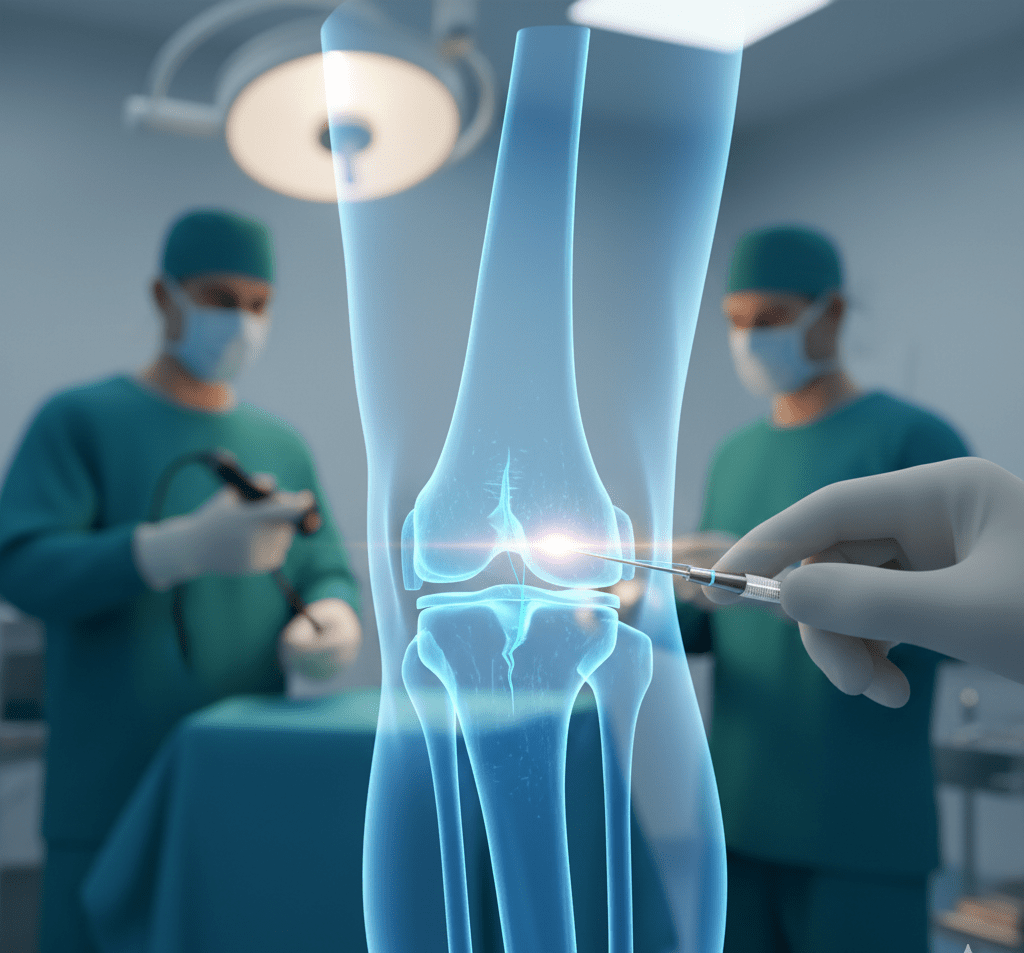
Introduction
The meniscus is the knee’s natural shock absorber, protecting the joint from excessive stress.
In the past, surgeons commonly removed the torn portion of the meniscus, but modern research has shown that this approach often leads to early knee osteoarthritis.
Today, meniscus repair is considered the gold standard whenever possible.
What Is a Meniscus Tear?
A meniscus tear is one of the most common causes of knee pain, often resulting from:
- Sports injuries
- Sudden twisting movements
- Degenerative changes with age
Types of Meniscus Tears:
- Traumatic tears
- Degenerative meniscus tears
Why Not Remove the Meniscus?
While meniscectomy may provide short-term pain relief, it:
- Reduces shock absorption
- Increases joint stress
- Accelerates knee cartilage degeneration
This is why meniscus repair vs meniscectomy is a critical discussion in modern orthopedic surgery.
Arthroscopic Meniscus Repair
With advances in arthroscopic knee surgery, surgeons can now perform arthroscopic meniscus repair using:
- Specialized sutures
- All-inside fixation devices
- Minimally invasive techniques
Benefits of Meniscus Repair:
✔️ Preserves knee cartilage
✔️ Reduces future arthritis risk
✔️ Improves long-term outcomes
✔️ Protects knee function
Recovery After Meniscus Repair Surgery
Successful outcomes depend heavily on proper rehabilitation:
- Limited weight bearing for 4–6 weeks
- Structured physiotherapy program
- Gradual return to sports and activities
⏱️ Meniscus repair recovery time varies based on tear type and patient compliance.
When Should You See a Meniscus Repair Specialist?
- Persistent knee pain
- Locking or instability
- Failed conservative treatment
- Desire to preserve the knee joint